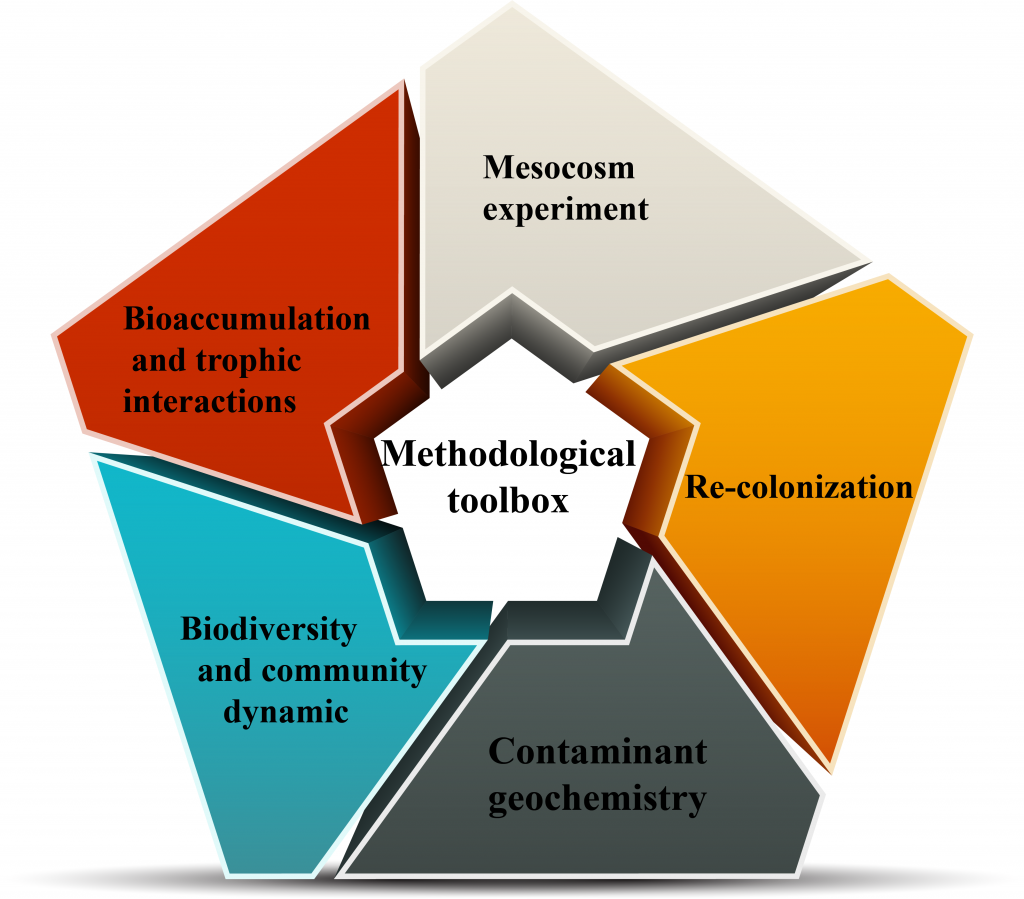
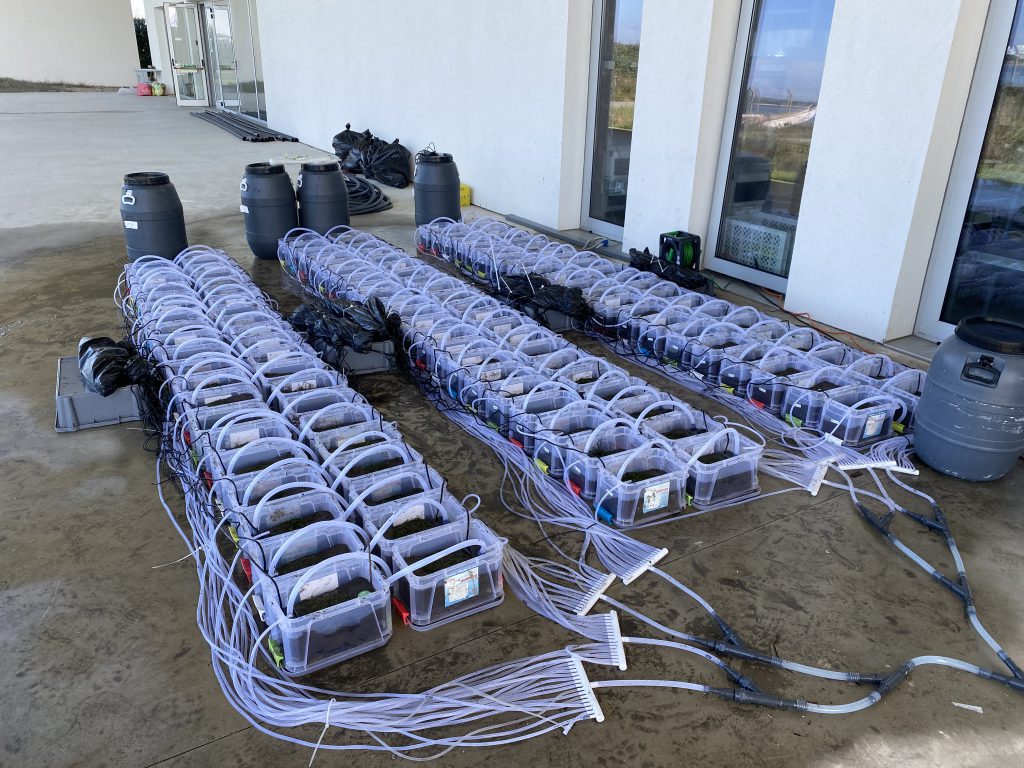
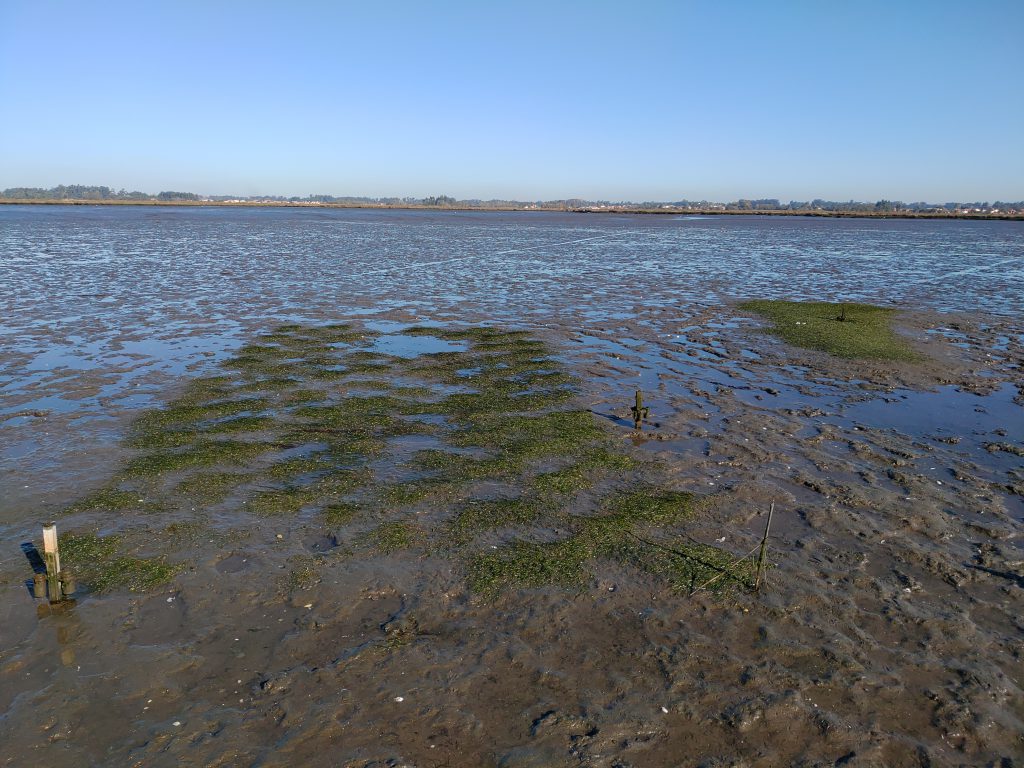
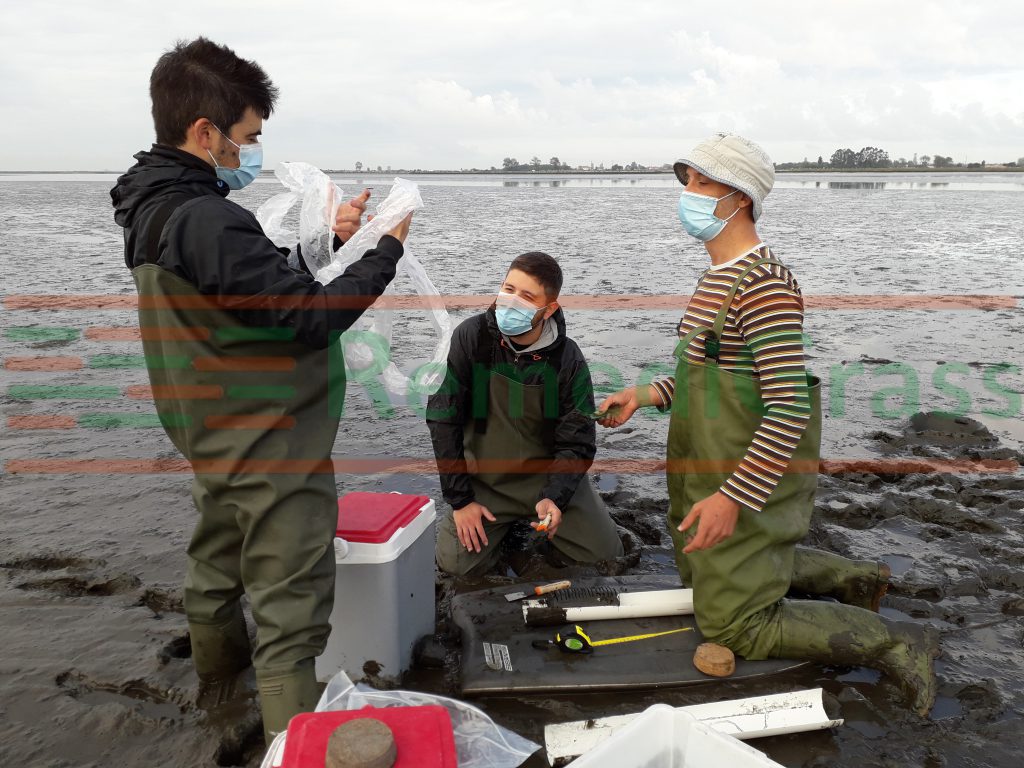
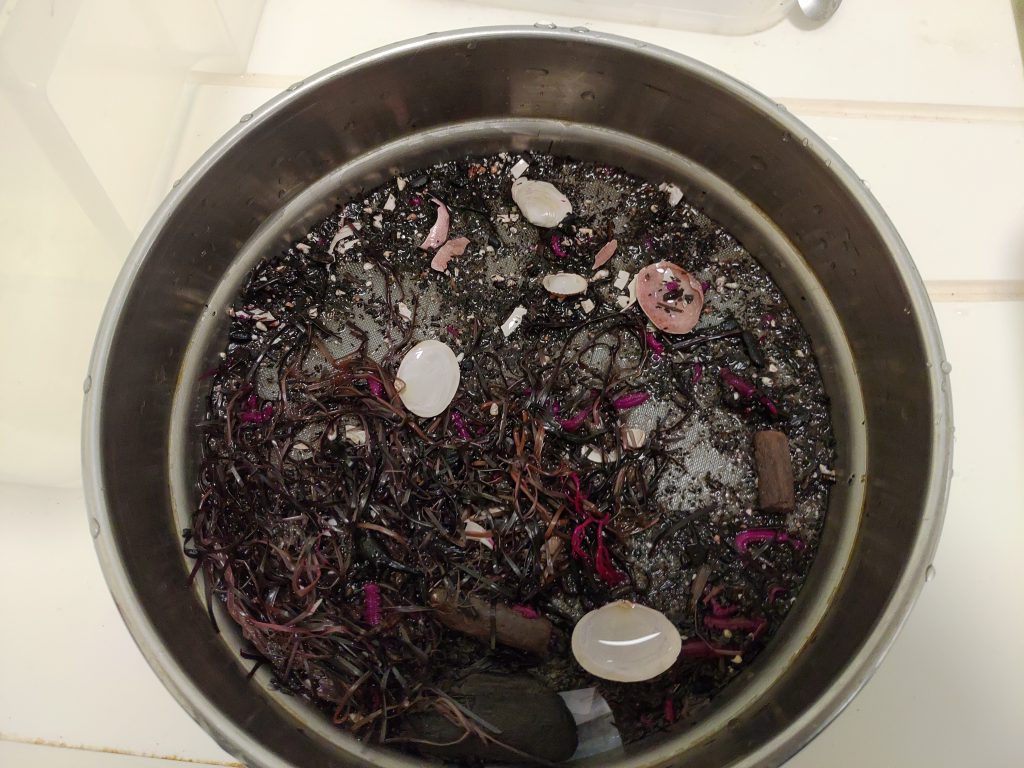
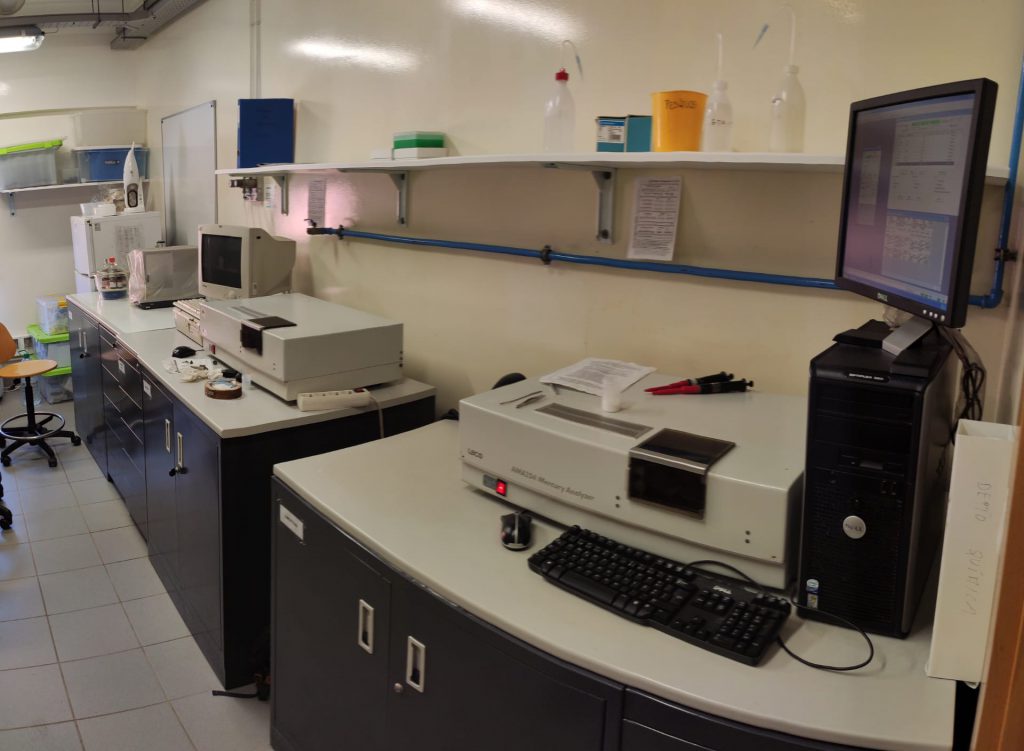
General Goal Test the viability and efficiency of seagrass beds as a remediation tool for the rehabilitation of contaminated estuarine areas Final goal -> Develop a methodological toolbox (site assessment, methodologies, contingency actions, cost-benefit ratio) to rehabilitate degraded estuarine ecosystems Mesocosm experiment To determine the most favourable conditions for the survival of Zostera noltei transplants, through laboratory growth experiments Analysis of biomass and coverage area Analysis of photosynthetic activity (PAM-Imaging) Analysis of physiological response (e.g., glutathione, phenolic acids) Analysis of elemental composition (e.g., metals in root and shoot) Re-colonization Perform a pilot Zostera noltei transplant experiment in the Largo do Laranjo area of the Ria de Aveiro Zostera noltei transplantZostera noltei monitoringAnalysis of biomass and coverage areaAnalysis of photosynthetic activityAnalysis of elemental composition Contaminant geochemistry Evaluate the effect of seagrass cover on the contaminant geochemistry Measure sediment accretion/erosionAnalysis of fluxes of contaminants and nutrients from sediments to the water columnEvaluate vertical metal profiles in the sediment pore waters (DGT technique)Evaluate the influence of seagrass on contaminants sequestration Biodiversity and Community dynamics Evaluate the effect of the transplant experiment on the biodiversity and annual production of macrobenthic communities Analysis of taxonomical and functional biodiversity (in vegetated and non-vegetated areas)Quantification of ash-free biomassCalculation of annual biological production Bioaccumulation and trophic interactions Evaluate the contaminant bioaccumulation and trophic transfer Analysis of elemental composition in fauna (e.g., N. diversicolor and S. plana)Analysis of physiological response in faunaDetermination of energy pathwaysDetermination of contaminant transferDetermination of contaminants trophic magnification factors